Automatic Transmission Repair in Hickory, NC
Slipping, harsh shifts, no reverse or a transmission warning code. We find the actual fault and fix that part, whether it's a solenoid, the valve body or the torque converter, before anyone talks about replacing the whole transmission.
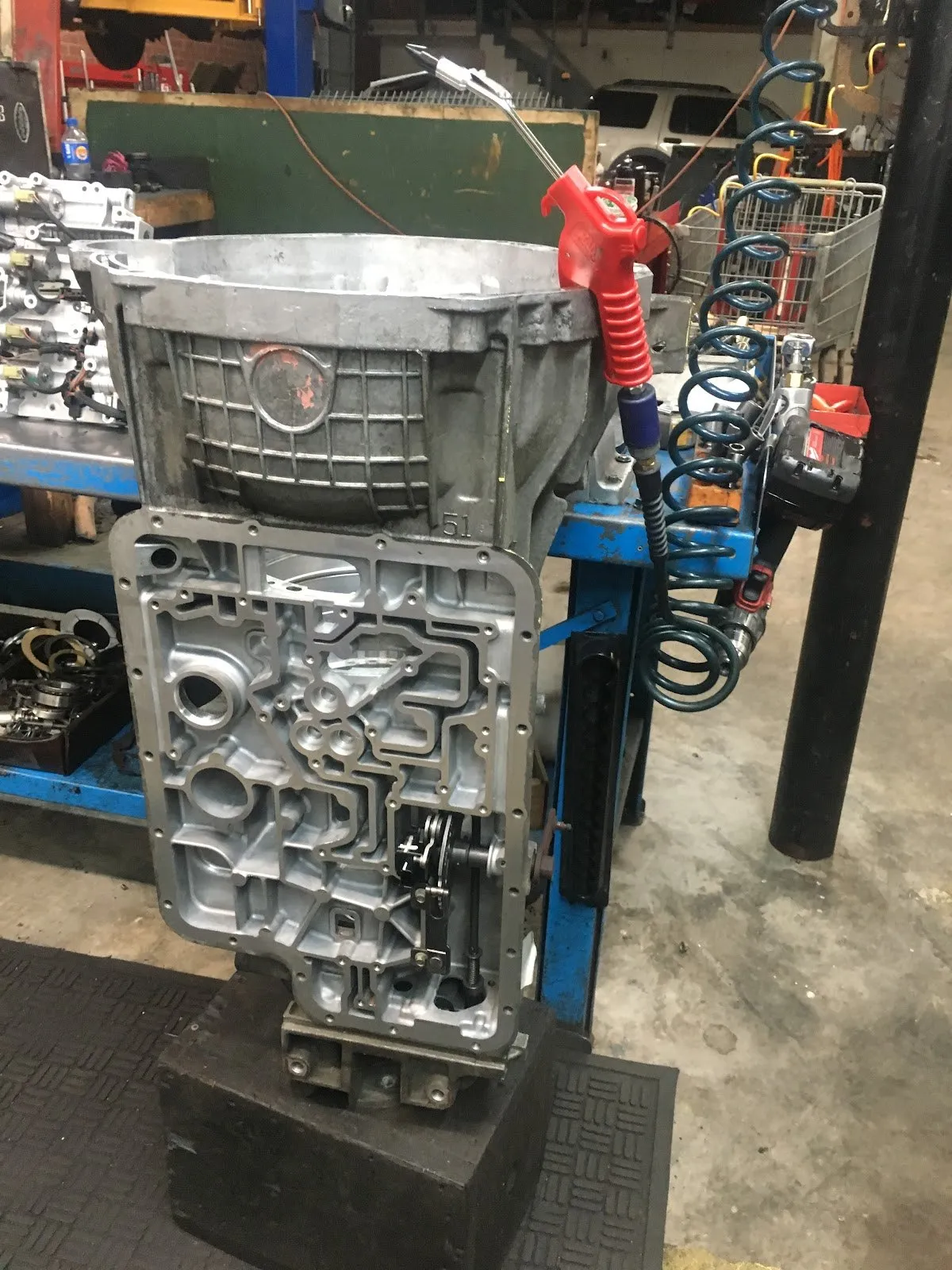
Most automatic transmission problems announce themselves the same way: a shift that feels wrong, a delay into gear, a flare in RPM, or a warning light. What causes it varies a lot. It could be a single sensor or solenoid, or it could be a worn-out clutch pack. Our job is to find out which, honestly, before you spend money on the wrong fix.
We start with the basics that a lot of shops skip: a real road test, a scan of the transmission computer, and a look at the fluid. Then we check the parts that commonly fail. These include shift and pressure-control solenoids, valve bodies with worn bores or stuck valves, torque converters that shudder or won’t lock up, and leaking seals that starve the unit of fluid.
When the problem is a part, we replace the part. The whole transmission only comes out when the inspection says it has to. One customer came in with a full-replacement quote from a dealer and left with a valve body repair instead.
We work on import and domestic automatics. That includes GM’s 4L60E, 4L80E, 6L50 and 6L80, Ford’s 4R70W and 6R80, Ram’s 545RFE and 68RFE, and Aisin and JATCO units in Toyota, Nissan, Honda and others. Customers come from across Hickory and the Catawba Valley, and many come back for every vehicle in the family.
If the inspection shows internal damage, we’ll walk you through a full rebuild. If it doesn’t, you won’t pay for one.
Signs you may need this service
- Slipping or RPM flare between gears
- Hard, late or banging shifts, especially when the transmission is warm
- No reverse, or no movement at all in one gear
- Check-engine light with transmission codes, or the vehicle stuck in 'limp mode'
- Shudder at steady highway speed, which often points to the torque converter
- Red fluid spots under the vehicle
These are common signs — a real inspection is what confirms the cause.
What we check
- Stored and pending trouble codes, plus live transmission data
- Fluid level, color, smell and debris
- Shift solenoids, pressure control solenoids and wiring
- Valve body bores, check balls and separator plate
- Torque converter clutch operation
- Seals, cooler lines and pan gasket for leaks
How it works
- 1Talk with you about what the vehicle is doing and when it happens.
- 2Road test, scan the computer and check the fluid.
- 3Pinpoint the failed part and explain your options in plain English, with a quote before any work.
- 4Make the repair, whether that's a solenoid, valve body, torque converter, seals or a full rebuild if it's truly needed.
- 5Road test again to confirm the shifts are right before you pick it up.
Frequently asked questions
Does slipping always mean I need a new transmission?
No. Low or burnt fluid, a failing solenoid or a valve body problem can all feel like slipping. Sometimes it is internal wear that needs a rebuild. A proper diagnosis tells you which before you spend money.
Can a valve body or solenoid be replaced without a rebuild?
Often, yes. On many units the valve body and solenoids can be serviced without removing the transmission. If the clutches inside are already damaged, though, a valve body alone won't fix it, and we'll tell you that up front.
My truck shudders on the highway. Is that the transmission?
A shudder around 40–60 mph is commonly the torque converter clutch, but tires, driveshaft and engine misfires can feel similar. We road test and check data to sort out which one it is.
Is it safe to keep driving with a transmission warning?
We'd advise against it. Driving on a slipping or overheating transmission can turn a smaller repair into a full rebuild. Call us. If it isn't safe to drive, ask about towing.
Transmission acting up? Let’s find out why.
Tell us what your vehicle is doing and we’ll take it from there. The request takes a couple of minutes, or call and talk to the shop directly. Se habla español.